Assimilationism and the Racial Politics of National Belonging
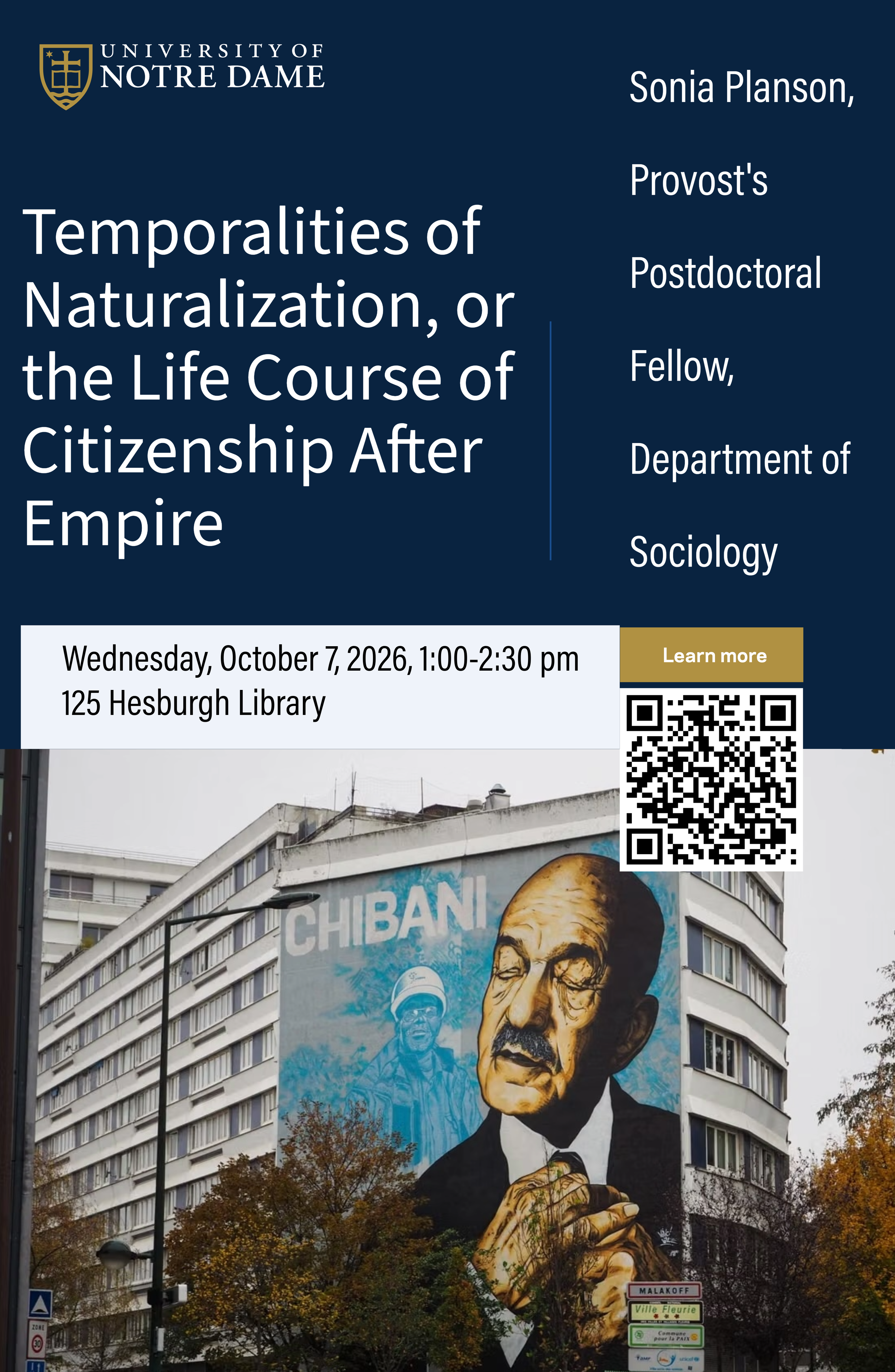
How do some immigrant families come to understand that they are seen as a problem? What does it mean to “do immigration right”? And what do our commonsense assumptions about cultural difference and national belonging cost immigrants and their descendants? This project aims to answer such questions using interviews with immigrant parents and their teenage children living in the Chicago and Paris metropolitan areas. These families come from 40 different countries, and are racialized in a range of different ways. As scholars of whiteness and migration have argued, we also need to start approaching privileged, Western migrants as exactly that: migrants. My project includes and compares the experiences of European and non-European immigrants to understand: how are immigrant families’ experiences shaped by their proximity to whiteness?
My book project, provisionally entitled The False Promises of Assimilation: Immigrant Families and the Impossible Task of Belonging, takes a critical look at commonplace notions of “assimilation”—starting from immigrant families’ perspectives—to understand how they contribute to the everyday politics of race. These families reveal that assimilationism functions as an enduring mechanism of racialization across generations, as it paradoxically demands conformity from those simultaneously constructed as unassimilable. In other words, commonplace ideas about assimilation have become a form of everyday racism experienced not only by immigrants, but also their descendants. This happens in cosmopolitan cities both within national contexts that are explicitly assimilationist (France) or tend to be considered more multicultural (the U.S. “nation of immigrants”).
In an article published recently in Ethnic and Racial Studies, Yannick Coenders and I use my interview data to analyze how assimilationism leads to the denial of everyday racism. From the Netherlands and France to the United States, we argue that racialized assimilationism is characterized by processes of 1) responsibilization for nonwhites’ own marginalization and 2) a pedagogy of disavowal.
More articles to come!
Cultural Capital and Education in France
Recent scholarship on cultural capital and education has incorporated more attention to race and gender, but mainly focusing on the U.S. With a quantitative analysis of French Ministry of Education data, I turn back to the context that gave birth to this academic tradition, and investigate the racialized and gendered dimensions of cultural capital in France.
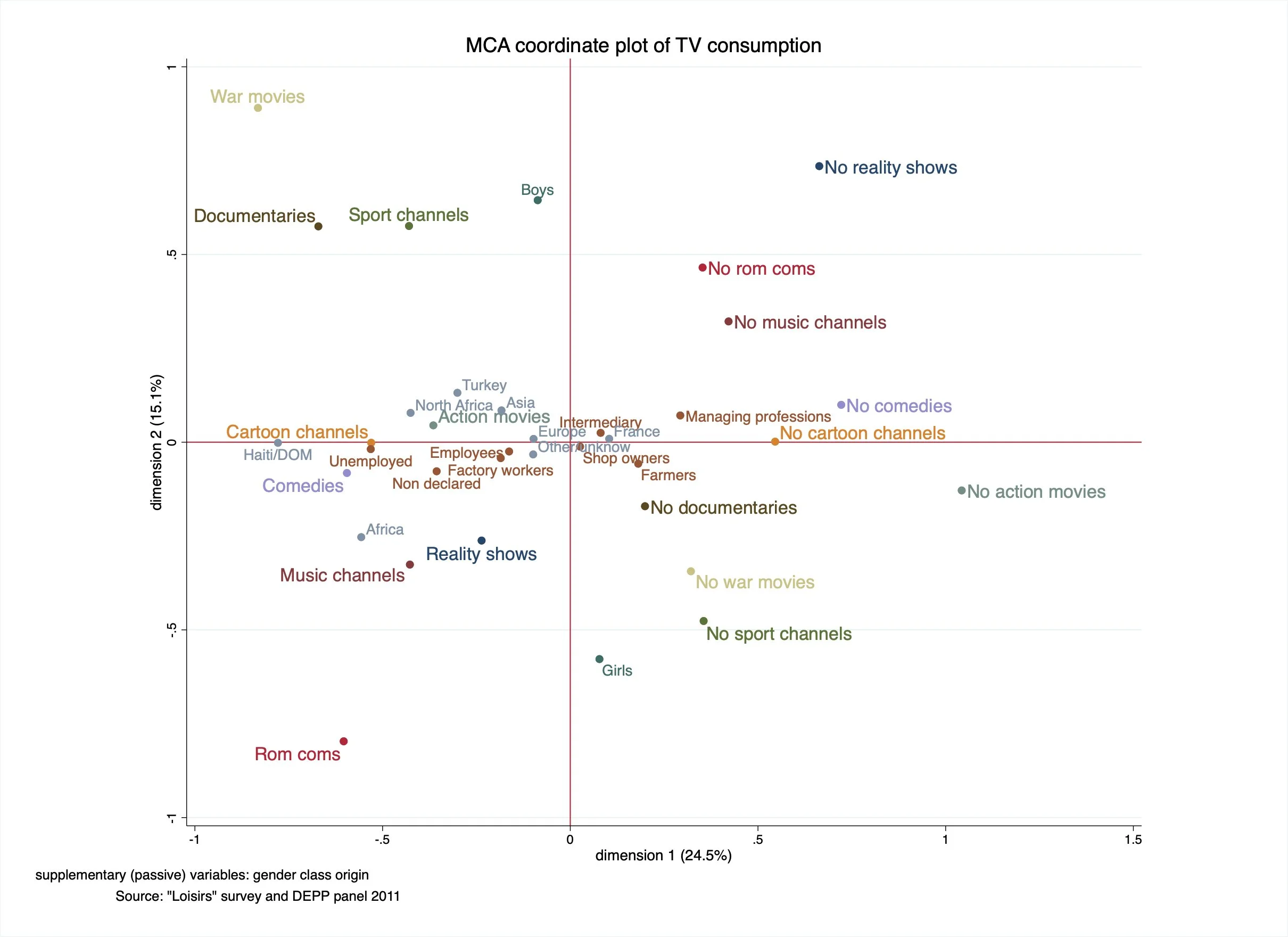
In addition to addressing this gap, this data allows me to contribute to ongoing conversations about the very concept of cultural capital. I investigate a wide array of practices (e.g., reading, but also sports, watching documentaries, or internet use) and consumption of different cultural genres when reading or watching TV (e.g., “highbrow” literature vs. magazines, documentaries vs. reality TV).
This work is published in Sociology of Education and Poetics.
Postcolonial Citizenship
Another line of research approaches postcolonial citizenship through a life course lens, asking how its meaning changes as migrants age and across generations. I previously researched naturalization among older immigrants in France. Using mixed methods and a case study of a recent French citizenship law designed for older, longtime residents, I have studied both state- and individual-level aspects of naturalization. This preliminary case study highlights the state’s attempt to resanctify citizenship, notably by defining the ideal assimilated immigrant based on generational, time, and blood criteria. Statistical analysis of census and other survey data shows the role of colonial history in immigrants’ relationship to naturalization, and ethnographic work and interviews allowed me to explore the different motives and obstacles to naturalization and propose an ideal-typical classification of reasons and determinants for late naturalizations. I have revised and resubmitted part of this work for publication in the Journal of Ethnic and Migration Studies.
More soon.